
A History of Jehovah's Witnesses: From a Black American Perspective — Is This the Book the JW Community Has Been Waiting For?
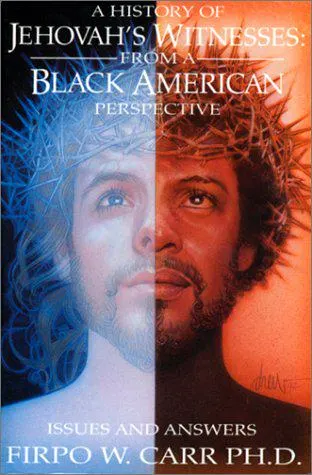
For more than a century, the Watchtower organization has depended on the devotion, labor, and sacrifice of Black American members. They knocked on doors in Jim Crow-era neighborhoods. They built congregations in urban communities when other churches would not. They carried the faith into Caribbean and African nations that now account for some of the movement's largest membership bases. And yet, their story has been almost entirely absent from every major history of Jehovah's Witnesses ever written.
That absence is not an accident. It is a pattern. And A History of Jehovah's Witnesses: From a Black American Perspective is the first book to break it.
Whether you are still an active Witness, a former member still working through what the organization meant to you, or a scholar of American religious history, this book will change how you understand the movement. Here is why it matters, what it covers, and why it deserves a place on every serious reader's shelf.
- According to the Pew Research Center's 2016 Religious Landscape Study, approximately 27% of U.S. Jehovah's Witnesses identify as Black or African American, more than double the 13% Black share of the general U.S. population.
- This book is the first comprehensive historical account to center the Black American experience inside the Watchtower organization.
- It documents early racist content in Watch Tower publications, segregation-era congregation practices, and the ongoing racial dynamics that official histories have never addressed.
- Current members, former members, and religious scholars all stand to gain a fundamentally richer picture of the faith from reading this work.
Why Has the Black American Experience in the JW Organization Been Ignored for So Long?
In 2016, the Pew Research Center's Religious Landscape Study found that Black Americans make up roughly 27% of the Jehovah's Witness membership in the United States, a proportion nearly twice their share of the general population. Despite that outsized presence, no major scholarly or popular history of the Witnesses has ever placed Black American members at the center of its narrative. The omission says as much about religious historiography as it does about the organization itself.
Most existing histories of Jehovah's Witnesses were written from a Western, largely white European or American perspective. They trace the movement's theological evolution, its legal battles, its eschatological predictions, and its leadership transitions. Those are legitimate subjects. But they leave untouched the lived experiences of the millions of Black members who gave the movement much of its grassroots strength in the twentieth century.
The Watch Tower Bible and Tract Society was founded in 1879 by Charles Taze Russell. From the earliest decades of the organization, Black Americans joined in significant numbers, drawn by the movement's promise of divine equality under God. The gap between that theological promise and the racial realities inside the organization is one of the most compelling and least-examined tensions in American religious history. This book examines it directly.
What Does A History of Jehovah's Witnesses: From a Black American Perspective Actually Cover?
The book is the most thorough account of its kind: it traces the arc of Black American involvement with the Witnesses from the earliest convert communities of the late nineteenth century through the civil rights movement and into the modern congregation. No prior work has assembled this narrative in one place, or told it with the depth and specificity that Black readers deserve.
Rather than treating the Watchtower organization as a monolith, the book excavates the layers beneath official records. It recovers the names and stories of early Black pioneers, the men and women who organized congregations in segregated cities, traveled field service territories that white members avoided, and built the institutional infrastructure of the movement from the ground up.
The civil rights era receives particularly careful treatment. This was a period when the organization's official position of political neutrality placed many Black Witnesses in a painful bind. While their neighbors marched and organized against systemic racism, Black JWs were counseled to remain separate from "worldly" political movements. The book does not simply note this tension; it gives it human texture through historical records, personal accounts, and documentary evidence that have never before been gathered in one volume.
How Did Black Americans Shape the Growth and Culture of Jehovah's Witnesses?
Black American members were not passive recipients of a faith handed to them by white missionaries. They were active architects of the movement's urban growth, its evangelism culture, and its global spread. Their contributions are woven into the very fabric of how the Witnesses operate today, even though official accounts rarely credit them.
In the mid-twentieth century, as American cities underwent rapid demographic change, Black JWs became the primary engine of congregation growth in places like New York, Chicago, Detroit, and Los Angeles. Door-to-door ministry, the cornerstone of Witness identity, was often carried out most persistently and most successfully by Black members in neighborhoods that white members had quietly stopped visiting. The cultural habits of perseverance, community building, and oral witness that Black American Christians had developed across generations translated directly into the kind of committed field service the organization prizes.
Beyond evangelism, Black American members contributed richly to the musical and social culture of congregations. The Kingdom Hall worship style in urban Black communities developed its own character, one shaped by the gospel and spiritual traditions these members brought with them. This book is one of the first to name and describe that cultural contribution rather than assuming that Witness life was uniform across racial groups.
What Does This Book Reveal About Race, Doctrine, and Identity Inside the Organization?
The Watchtower has long taught that Jehovah's Witnesses stand apart from racial division because, in their view, God sees no color. That theology has genuine appeal. But for Black American members living through Jim Crow, the civil rights movement, and the decades of systemic inequality that followed, the gap between doctrinal colorblindness and on-the-ground reality was often wide and painful.
This book takes that tension seriously. It documents what it meant, psychologically and spiritually, to be told that your racial identity did not matter in a congregation that was itself not always free of the prejudices of the surrounding society. Black members who experienced racism from white elders or congregation members had limited recourse. Reporting it up the organizational hierarchy often led nowhere. The theology of unity, applied unevenly, could actually silence the people most harmed by racial injustice.
The author weaves personal testimony throughout the historical analysis, giving the book an emotional honesty that purely academic treatments cannot match. These are not abstractions. They are the experiences of real people who loved their faith and struggled with what that faith sometimes demanded of them as Black Americans in a society that was openly hostile to their dignity.
Was Racism Ever Institutionalized Within the Jehovah's Witnesses — And Does the Organization Acknowledge It?
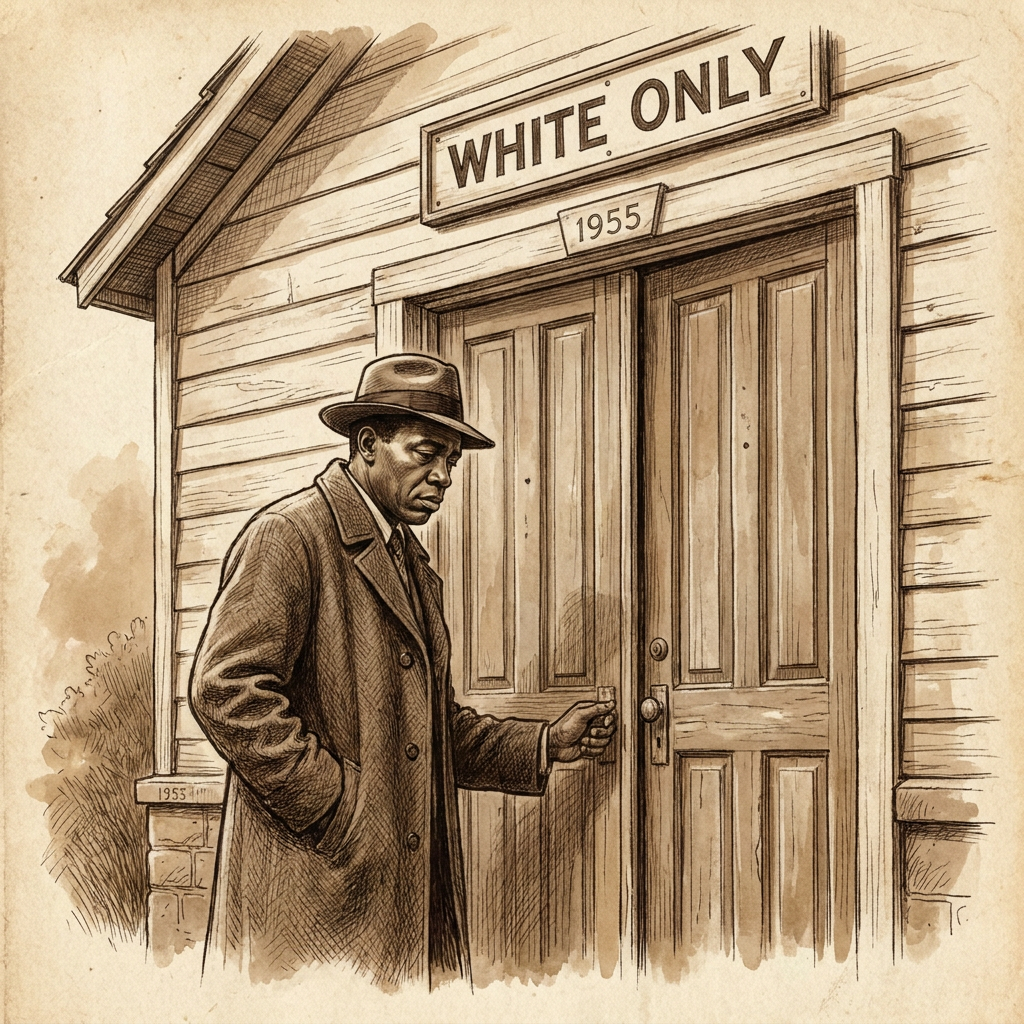
The historical record is unambiguous: early Watch Tower publications contained explicitly racialized content, and segregated practices existed in some U.S. congregations well into the mid-twentieth century. Charles Taze Russell, the organization's founder, published materials that reflected the racial pseudoscience of his era. Some of those materials remained in circulation long after they should have been removed. This is documented history, not speculation, and it is a history the organization has never formally addressed.
What Early Watch Tower Publications Actually Said
Russell's writings on race included the claim that Black people could be spiritually transformed through faith in ways that would eventually overcome racial difference, a position rooted in the racial hierarchy thinking of the nineteenth century. The Watch Tower's "Photo-Drama of Creation" (1914) included racially stratified content that reflected contemporary prejudices. These are primary source documents. They exist. And for Black members who have encountered them, they raise serious questions that deserve serious answers.
Segregation Inside Congregations
In parts of the American South during the Jim Crow era, some Jehovah's Witness assemblies seated Black and white attendees separately, mirroring the racial practices of the surrounding society. The organization's leadership was aware of these practices. This history is not unique to the Witnesses; many American religious groups compromised with segregation in that period. What is distinctive is the organization's failure to reckon with it publicly or to acknowledge the harm it caused.
Modern Racism in the Congregation
The problem did not end with Jim Crow. Black members in recent decades have reported racial bias from white elders, unequal treatment in congregation appointments, and a culture in which racial grievances were discouraged as "divisive" or "worldly." When the organizational framework actively discourages discussing race, the people harmed by racism within the congregation have nowhere to turn. This book names that dynamic plainly and gives it the historical context it requires.
Why Should Current Members, Former Members, and Faith Researchers Read This Book?
This book speaks simultaneously to three distinct audiences, and the remarkable thing is that it does justice to all three. For current Jehovah's Witnesses, it offers a fuller and more honest picture of the faith they practice. For those who have left the organization, it provides context, validation, and a sense of shared history with a community of people who walked the same road. For scholars of American religion, it fills a genuinely significant gap in the literature.
Current members who read this book will not find an attack on their faith. They will find a careful, rigorously documented account of what Black Americans actually contributed to building the organization they belong to. That is not a threat to faith. It is an enrichment of it. Knowing the full story of your religious community, including its struggles and its moral failures, makes you a more thoughtful and more honest member of that community.
Former members, particularly Black Americans who left the organization and are still processing that experience, will find something rarer still: recognition. The specific pain of being Black inside an organization that told you your race did not matter, while sometimes treating you as though it very much did, is not something most books about Jehovah's Witnesses have ever acknowledged. This one does.
Faith researchers and historians of American religion will find in this book a primary resource that simply did not exist before. The author has assembled documentary evidence, oral histories, and historical analysis that fills a genuine scholarly gap. This is the kind of work that changes the terms of the conversation in a field.
This is the book Black Jehovah's Witnesses have been waiting for — and the one the whole community needs to read.
Get My Copy NowFrequently Asked Questions
Is this book officially sanctioned by the Watch Tower Society?
No, this book is an independent historical work. It is not produced by or affiliated with the Watch Tower Bible and Tract Society. That independence is precisely what makes it possible. Official organizational histories have consistently omitted or minimized the Black American experience. This book exists because independent scholarship can go where institutional history will not.
Do I need to be a Jehovah's Witness to understand or enjoy this book?
No background knowledge is required. The book is written to be accessible to general readers, current and former Witnesses, and scholars alike. According to the Pew Research Center (2016), roughly 2 million Americans currently identify as Jehovah's Witnesses, but the history covered here connects to the much broader story of Black American religious life in the twentieth century.
How does this book differ from other histories of Jehovah's Witnesses?
Every prior comprehensive history of the Witnesses has centered white, Western perspectives. None has treated Black American members as primary historical subjects. This book is categorically different: it places Black American experience at the center of the narrative from the first page to the last, recovering stories, names, and contributions that existing literature has ignored.
Has the Watch Tower Society ever formally apologized for racist content in its early publications?
No formal apology or public acknowledgment has ever been issued by the Watch Tower Society regarding racist content in early publications or segregated assembly practices. The Pew Forum on Religion and Public Life has documented Jehovah's Witnesses as one of the most racially diverse religious groups in the U.S., yet the organization's history of racial inequality has never been officially addressed.
Where can I buy A History of Jehovah's Witnesses: From a Black American Perspective?
The book is available through our online store. You can order a digital copy directly from this website. As one of the only comprehensive accounts of Black American experience within the Witness movement, demand has been strong among both community members and researchers. Order your copy today to secure yours.
Conclusion: A Story That Deserves to Be Told
Every person who has ever sat in a Kingdom Hall deserves to know the full history of the faith they practice. Every person who has left that Kingdom Hall and is still working through what it meant to them deserves to have their specific experience recognized and named. And every serious student of American religious life deserves access to the historical record that this book, for the first time, makes available.
A History of Jehovah's Witnesses: From a Black American Perspective is that record. It is rigorously researched, honestly written, and long overdue. The Black Americans who built so much of what the Witness movement became in the twentieth century are finally getting the history they were always owed.
Do not wait for the organization to tell this story. It never has, and it is not going to. This book tells it instead.
References
1. Pew Research Center — "Religious Landscape Study", retrieved 2026-07-14, https://www.pewresearch.org/religion/2016/04/12/religious-landscape-study/
2. Pew Forum on Religion and Public Life — "U.S. Religious Landscape Survey: Religious Beliefs and Practices", retrieved 2026-07-14, https://www.pewresearch.org/religion/2008/02/25/u-s-religious-landscape-survey-religious-beliefs-and-practices/


